Yashica Mat-124G
Rolleiflex-inspired twin lens reflex from Japan.

Yashica Mat-124G with 80mm f/3.5 Yashinon lens. (Color photos of the camera were made with a Nikon F, 55mm f/3.5 Micro-Nikkor-P.C, and Portra 400.)
A Japanese alternative to the Rolleiflex
The Yashica Mat is a twin lens reflex (TLR). Its design is derivative, based on the Rolleiflex. It has an 80mm f/3.5 Yashinon lens which, like the Tessar, has four elements in three groups (source: camera manual).
The Yashica Mat’s lens has been described as having ‘outstanding mid-aperture (i.e., f/8 or thereabouts) performance’ (Matanle, 1986). I think it works great at any aperture.

Sunrise at Angkor Wat Cambodia Yashica Mat-124G, 80mm f/3.5 Yashinon, FP4+, year 2000. Ansel Adams (1963) wrote, ‘Dawn is the most magnificent light of all…’ and while his context was Death Valley, it is equally true at Angkor Wat.

Guangdong Province, China Yashica Mat-124G, 80mm f/3.5 Yashinon, Tri-X, year 2000.

Busan, South Korea Yashica Mat-124G, 80mm f/3.5 Yashinon, Tri-X, early 2000s.
Compared to my Rolleiflex MX
Both have f/3.5 lenses with four elements in three groups.
The Yashica Mat has a brighter focus screen.
The Rolleiflex has a solid, machined feel; the Yashica Mat is lighter with a stamped sheet metal vibe.
The Yashica Mat lacks the automatic film starting feature of the Rolleiflex. Instead, you line up the start of the film manually. I don’t see this as a disadvantage.
The shutter lock on the Rolleiflex is more elegant and easier to use.
There are other differences but those are the main ones.
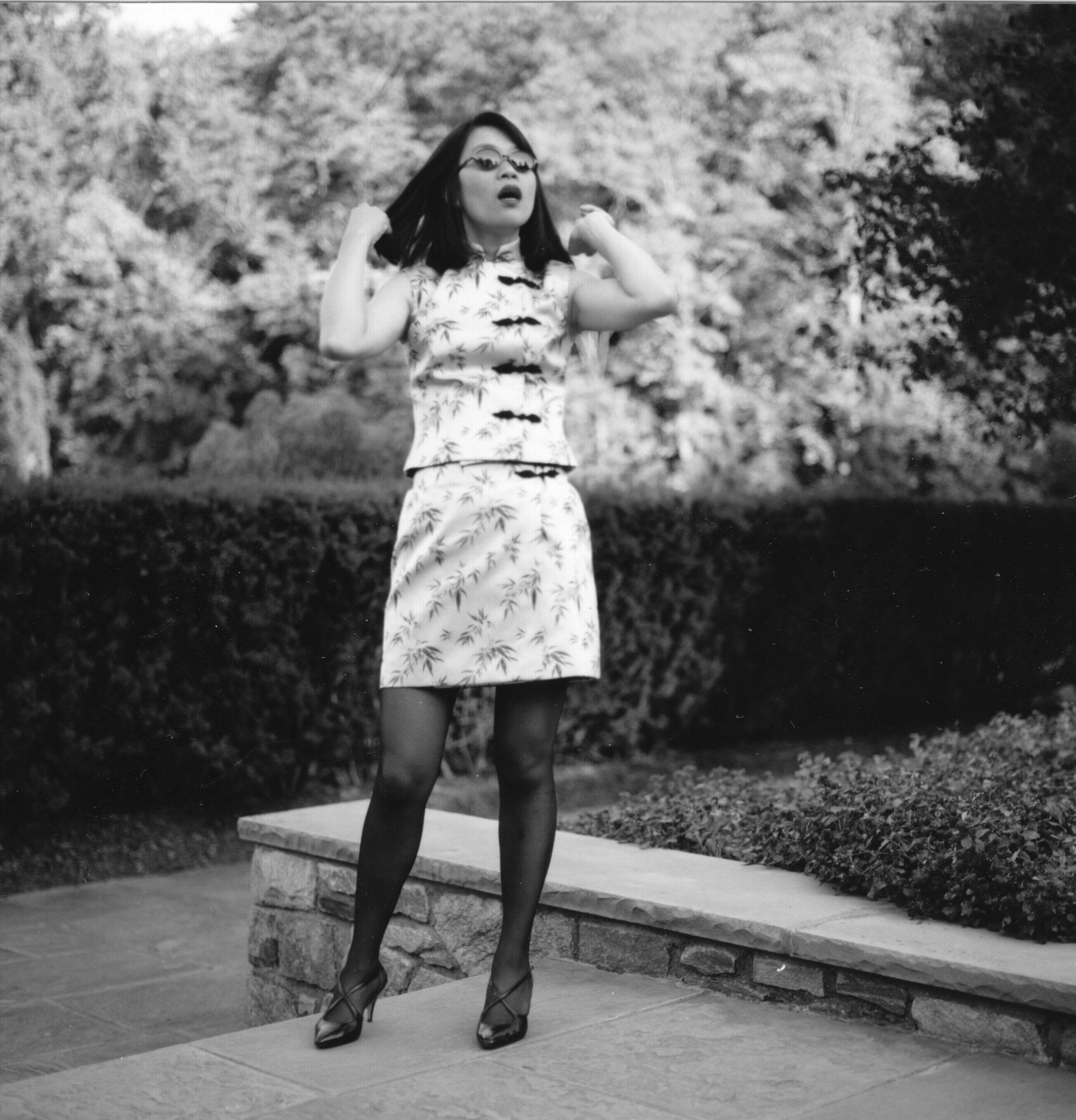
Brookside Garders Wheaton, Md. Yashica Mat-124G, 80mm f/3.5 Yashinon, Tri-X, 1998.
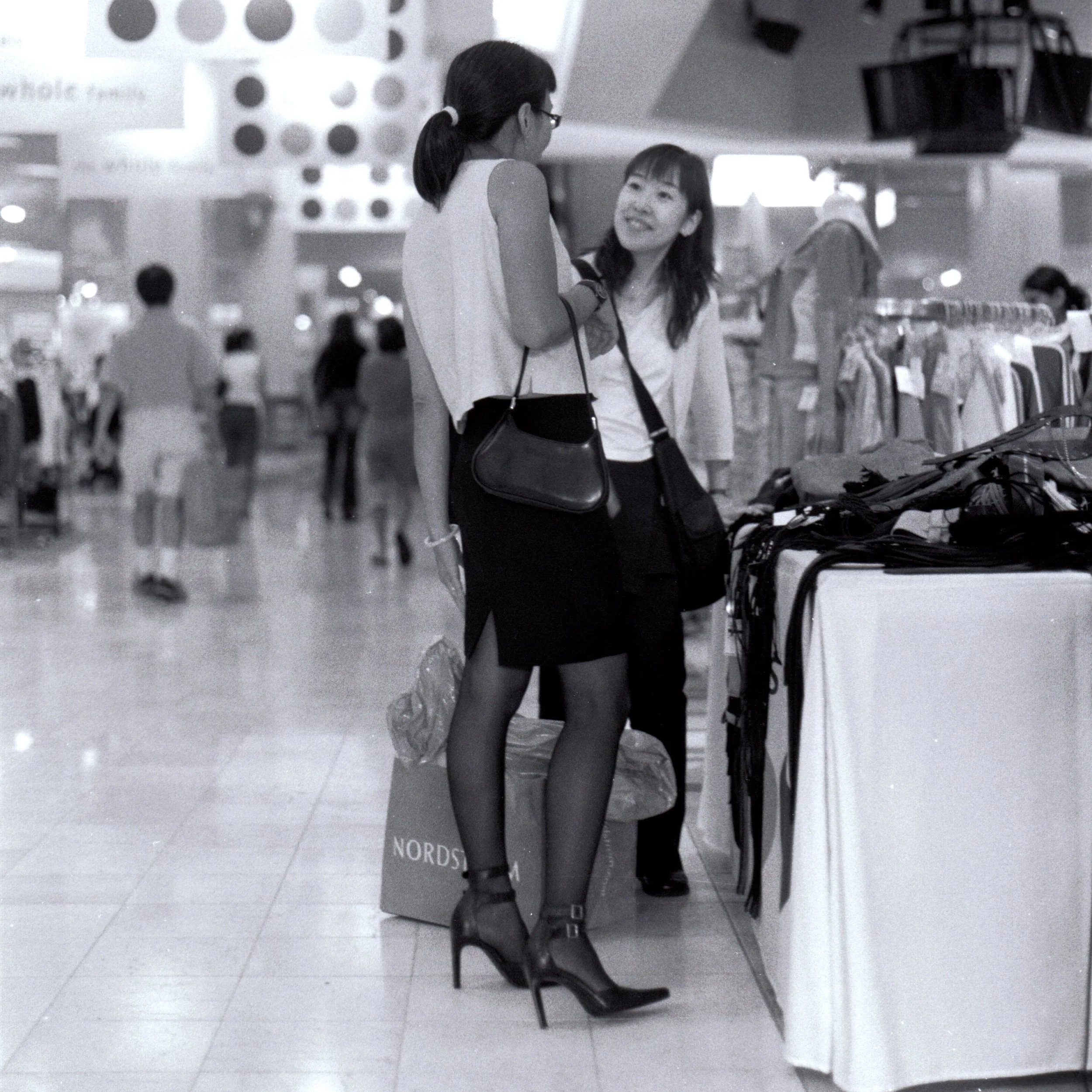
Department store shopping Bethesda, Md. Yashica Mat-124G, 80mm f/3.5 Yashinon, HP5+, mid-2000s.
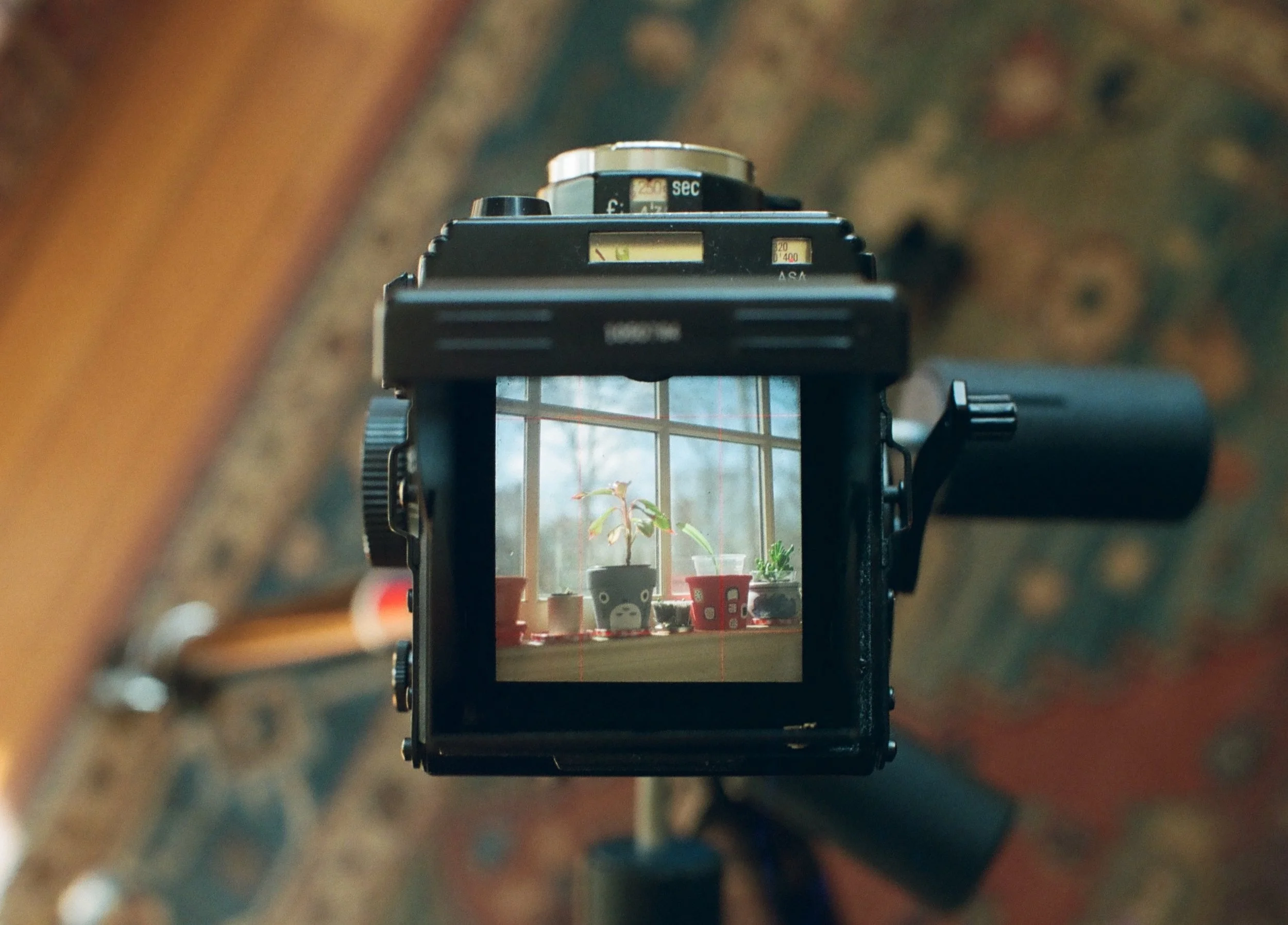
Yashica Mat-124G — the bright waist level finder makes framing and focusing quick and accurate.
f/3.5 v. f/2.8 lenses
The Yashica Mat lens is an 80mm f/3.5 and there was no option for a faster f/2.8 lens as with some Rolleiflex models. Usually I like fast lenses. However, f/2.8 Rolleiflexes are surprisingly bulkier and heavier, so I prefer the f/3.5 versions.

New Jeans Roppongi, Tokyo Yashica Mat-124G, 80mm f/3.5 Yashinon, Verichrome Pan, 2004.

Dinner party Wheaton, Md. Yashica Mat-124G, 80mm f/3.5 Yashinon, Tri-X, mid-2000s.
Maintenance and repair
I used my Yashica Mat for years, on many trips and I put a lot of film through it. It’s a really good camera. Recently, however, the shutter gave out and will require a repair.
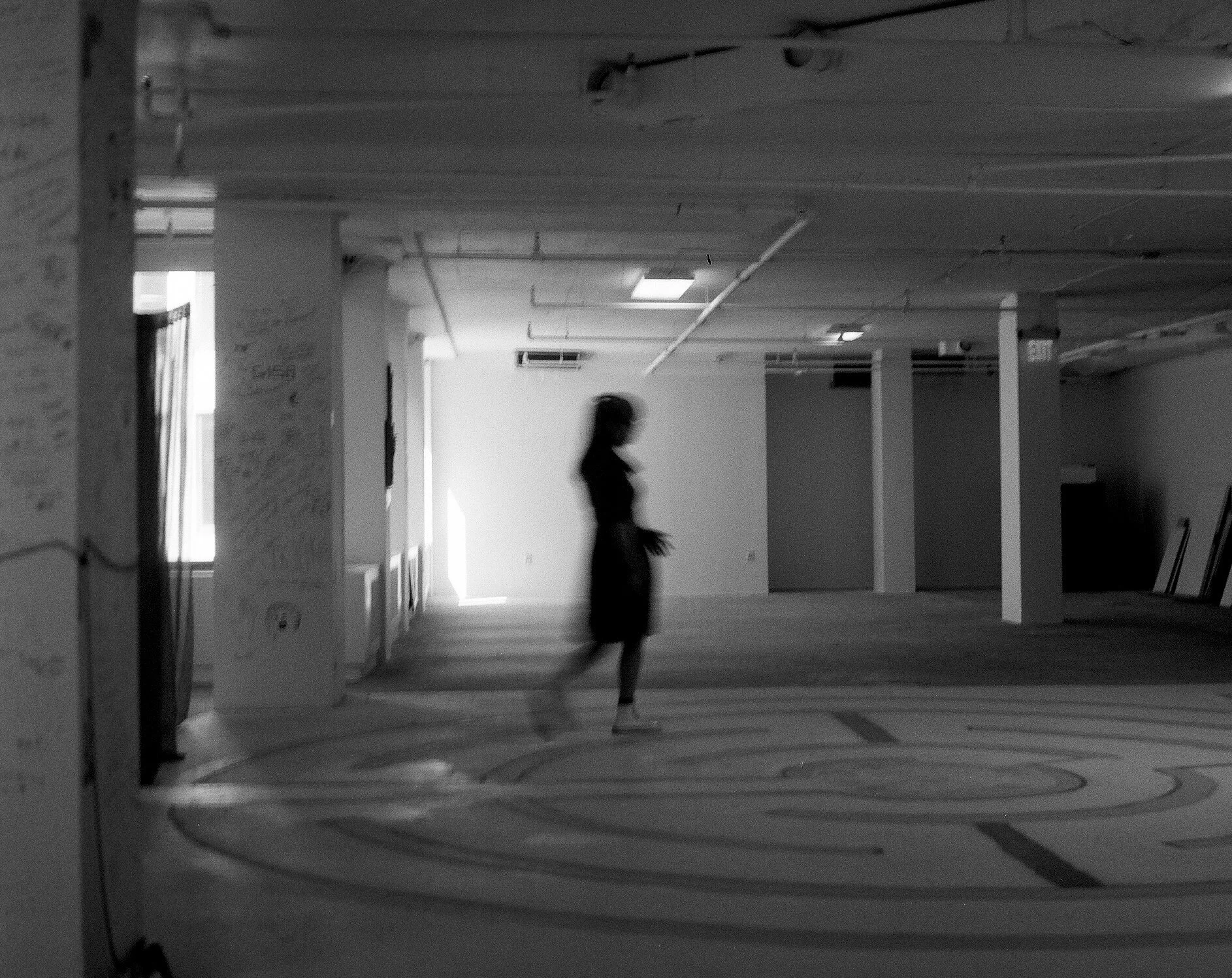
Artomatic Washington, D.C. Yashica Mat-124G, 80mm f/3.5 Yashinon, Tri-X, 2024.
References / further reading
Camera manual: orphancameras.com
More references:
Adams, A., N. Newhall, R. Kirk, and E. Hamlin. 1963. Death Valley, 3rd ed.. San Francisco: 5 Associates.
Hunt, B. 2024. Film Camera Zen: A Guide to Finding the Perfect Film Camera. Los Angeles: Chronicle Chroma.
pp. 178-179: The Yashica Mat-124G is ‘extremely capable’ and performs ‘the same way as a Rolleiflex for a fraction of the price’.
Matanle, I. 1986. Collecting and Using Classic Cameras. London: Thames and Hudson.
McKeown, J.M. and J.C. 1996. McKeown’s Price Guide to Antique and Classic Cameras, 1997-1998. Grantsburg, Wis.: Centennial Photo.

Brookside Garders Wheaton, Md. Yashica Mat-124G, 80mm f/3.5 Yashinon, Tri-X, 1998.