Minolta Hi-Matic 7 and Konica Auto S2
Two 1960s rangefinder cameras with large-aperture fixed lenses
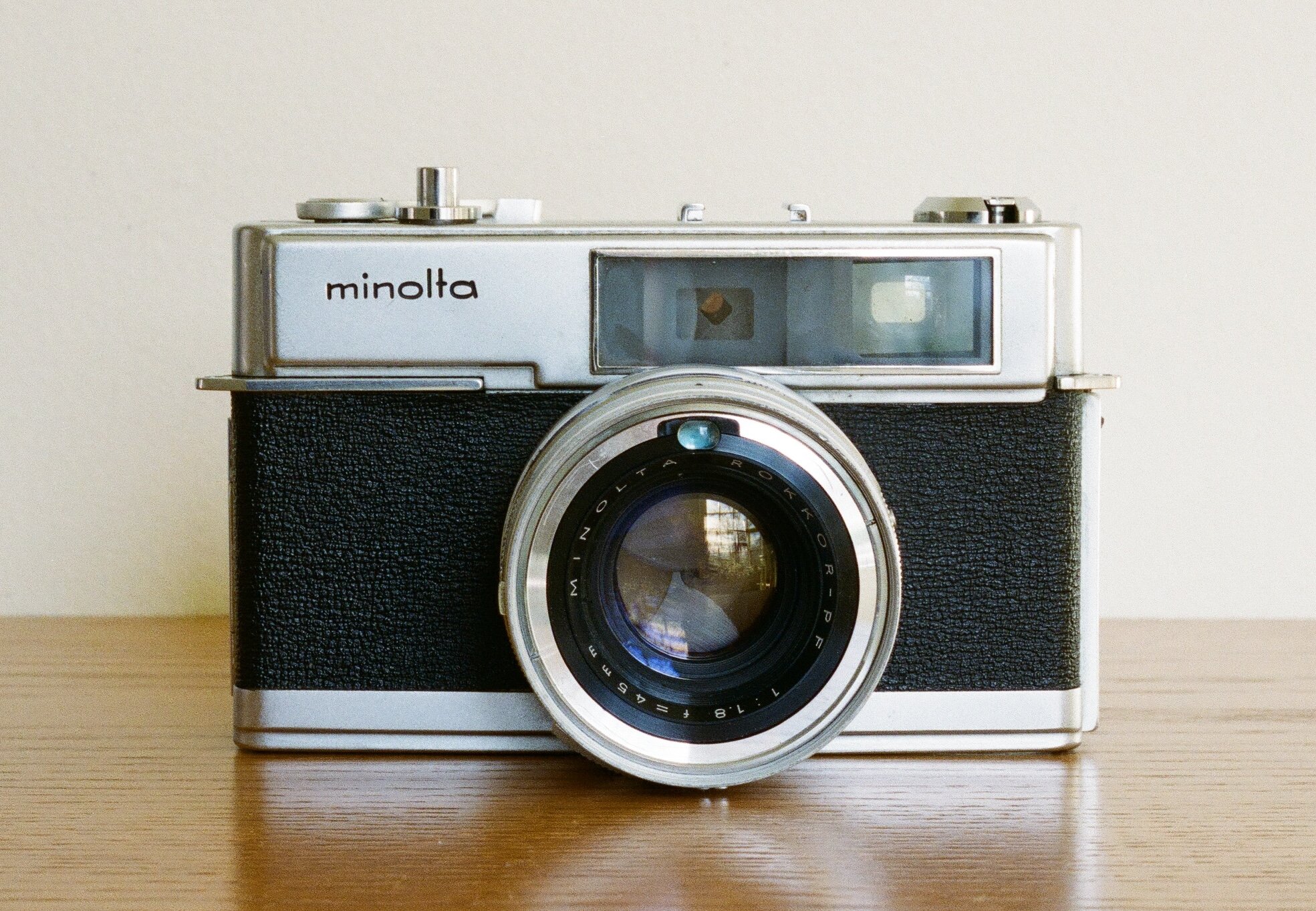
Minolta Hi-Matic 7 with 45mm f/1.8 Rokkor-PF lens. (Color photos of the cameras were made with a Nikon F, 55mm f/3.5 Micro-Nikkor-P.C, and Portra 400.)
Introduction to the cameras
The Minolta Hi-Matic 7 and the Konica Auto S2 are very similar. They were direct competitors in the upper-level amateur market of the 1960s, along with similar offerings from Canon, Olympus, and some other Japaneses camera makers.
Nikon steered clear of this market segment.
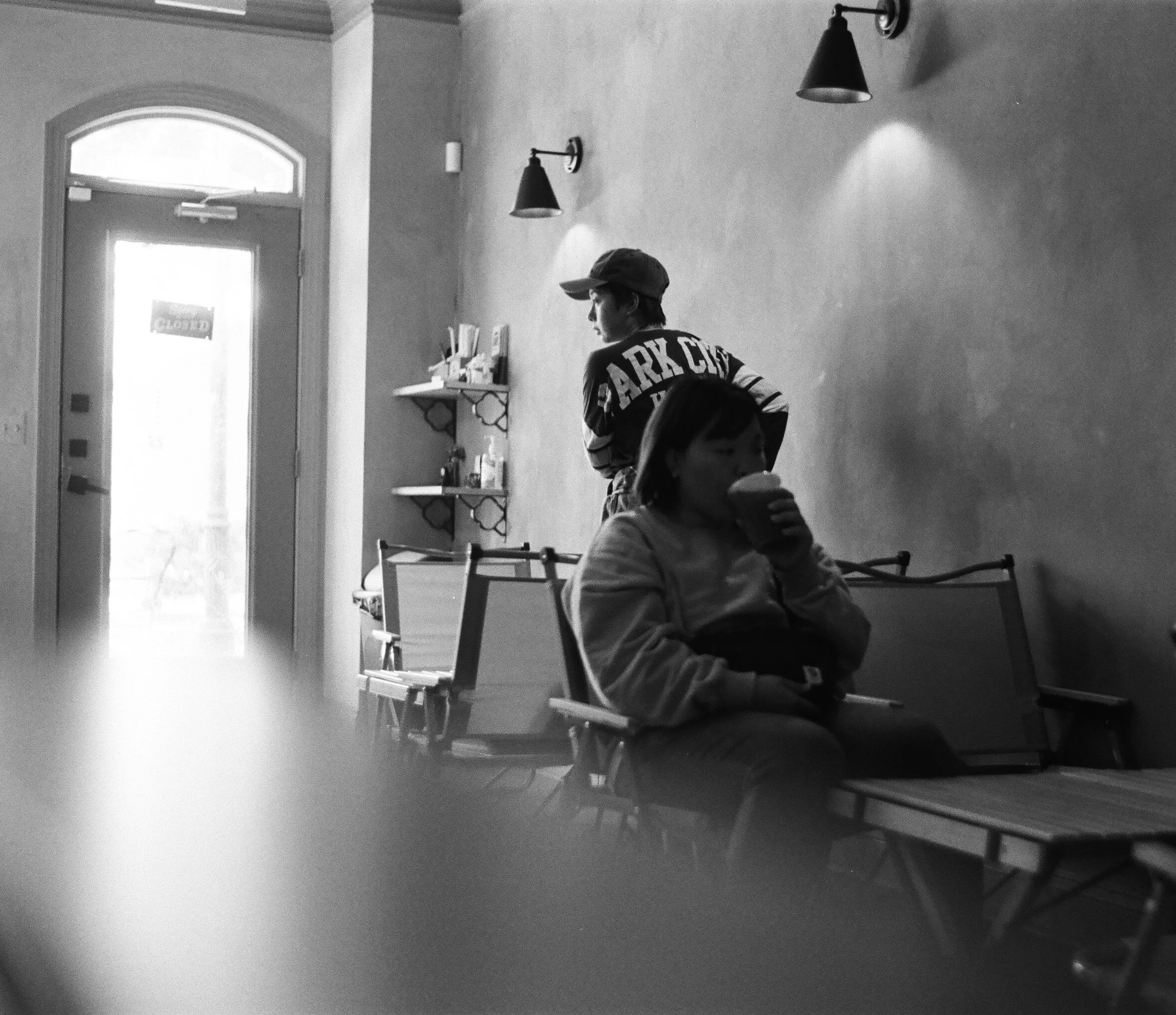
Neko Nook coffee shop Gaithersburg, Md. Minolta Hi-Matic 7, 45mm f/1.8 Rokkor-PF lens, Tri-X, 2025
Defining characteristics of this type of camera
A high grade, large aperture, fixed lens.
A CdS light meter sensor mounted inside the filter ring, eliminating the need for exposure correction when using a filter. This feature increases the diameter of the lens.
Automatic and manual exposure capability.
The viewfinder is large and bright, with automatic parallax correction.
A big, heavy camera. About like a contemporary SLR.
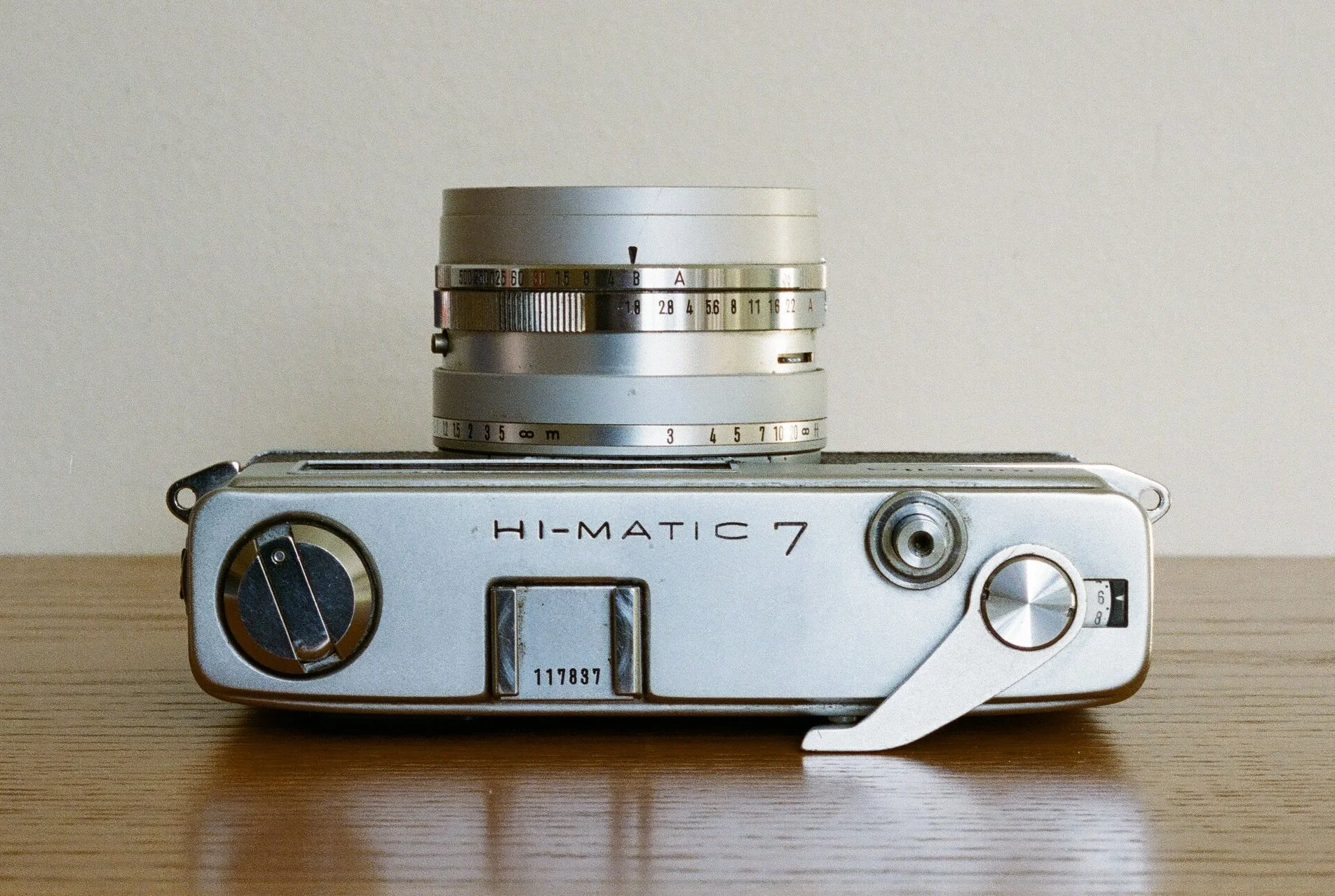
Minolta Hi-Matic 7 with 45mm f/1.8 Rokkor-PF lens
First class lenses
The standout feature of these cameras is their high-performance lenses:
Minolta Hi-Matic 7: six-element, 45mm f/1.8 Rokkor-PF.
Konica Auto S2: six-element, 45mm f/1.8 Hexanon.
These compare favorably to the lenses on my German-made fixed lens rangefinder cameras; for example:
Zeiss Ikon Contina Ic: 3-element 45mm f/2.8 Pantar.
Rollei 35: four-element, 40mm f/3.5 Carl Zeiss Tessar.
(Lens design info is from the camera manuals except for the Pantar which is from Neblette, 1959.)
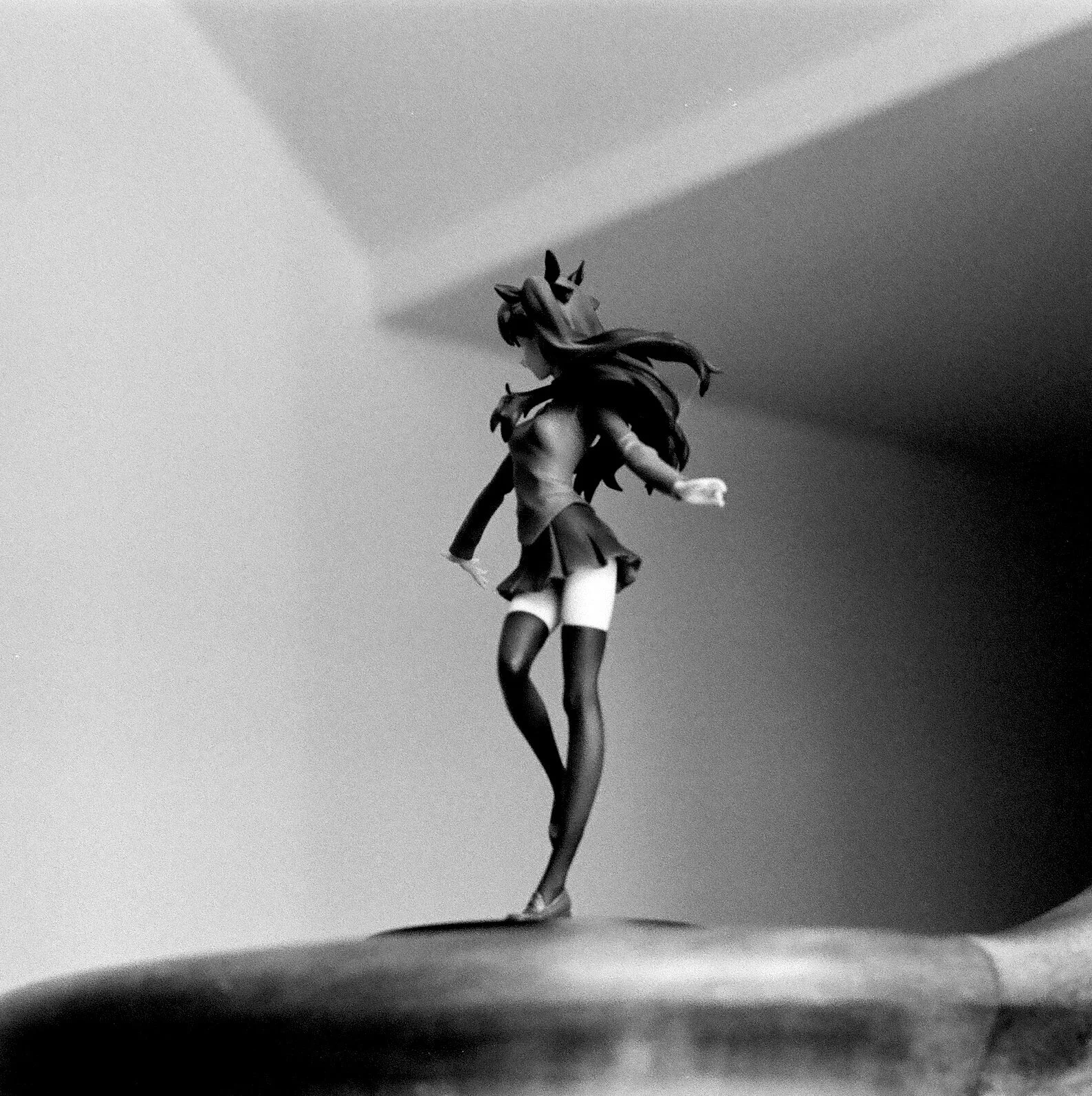
Anime figurine Minolta Hi-Matic 7, 45mm f/1.8 Rokkor-PF lens, Tri-X, 2025
The Hi-Matic 7 has three operating modes. As described in the manual:
Automatic operation: ‘You simply focus and shoot. Everything is automatic… The Hi-Matic 7 is equipped with a program shutter operated in conjunction with a CdS electric-eye light meter. The meter calculates the available light. The camera then selects from an optimum combination of shutter speeds and lens apertures to give you a correct exposure under a wide variety of conditions… There are no annoying calculations to make. Hi-Matic 7 does all the work for you’.
Manual operation: ‘You are in complete control of the camera. You select the shutter speed and aperture yourself’.
Light meter system: ‘You read the light meter scale in the viewfinder. It tells you how to set the camera for correct exposure’.
The automatic mode was quite advanced at the time and could be very useful, except that it is driven by an obsolete mercury battery. I leave the battery compartment empty, and use the ‘manual operation’ mode with a hand-held light meter or the sunny 16 method.
1962: the Hi-Matic is on a space mission
The Hi-Matic is historically significant. In 1962, on the first American orbital space flight, astronaut John Glenn used two cameras: a screw mount Leica supplied by NASA as mission equipment, and an Ansco Autoset that he had purchased himself. The latter was a Minolta Hi-Matic rebranded for the U.S. market by Ansco (Levasseur, 2011).
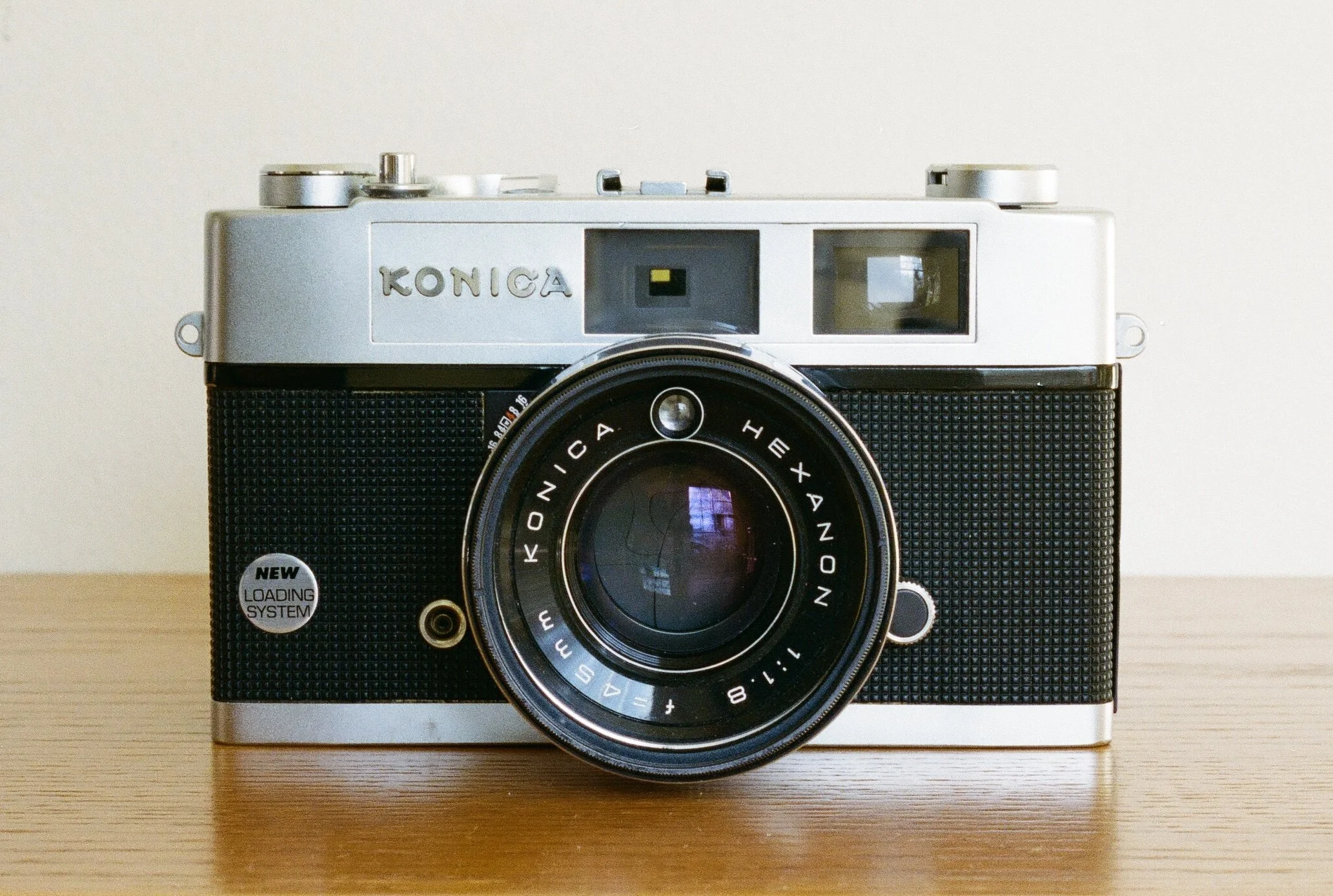
Konica Auto S2 with 45mm f/1.8 Hexanon lens. The label, ‘New loading system’ is a mystery; the film loading mechanism is in fact conventional.
Konica Auto S2
It’s very similar to the Minolta. Same lens spec, same basic design, same weight and form factor, same obsolete mercury battery for the meter.
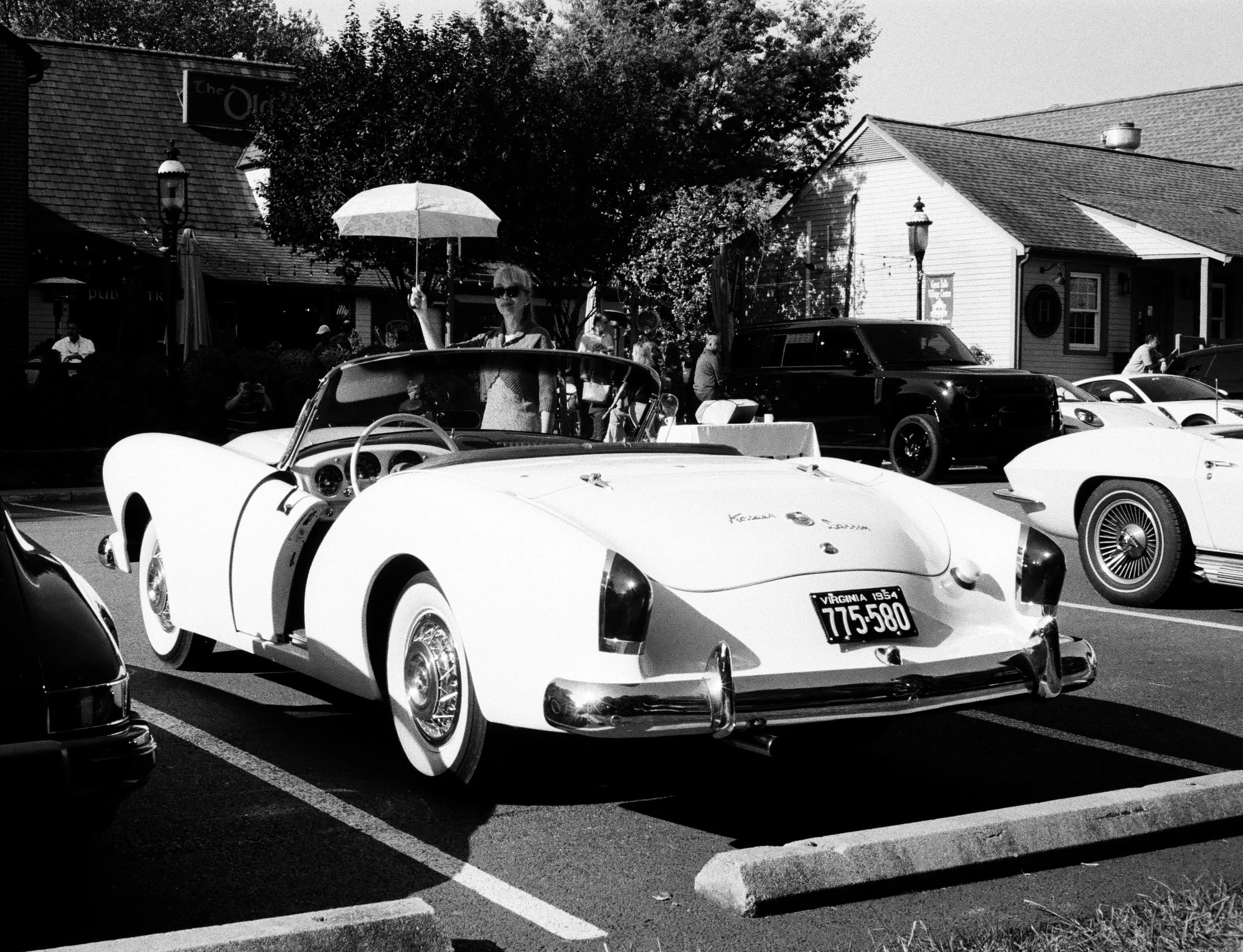
1954 Kaiser Darrin Katie’s Coffee House, Great Falls, Va. Konica Auto S2, 45mm f/1.8 Hexanon, Tri-X. 2025.
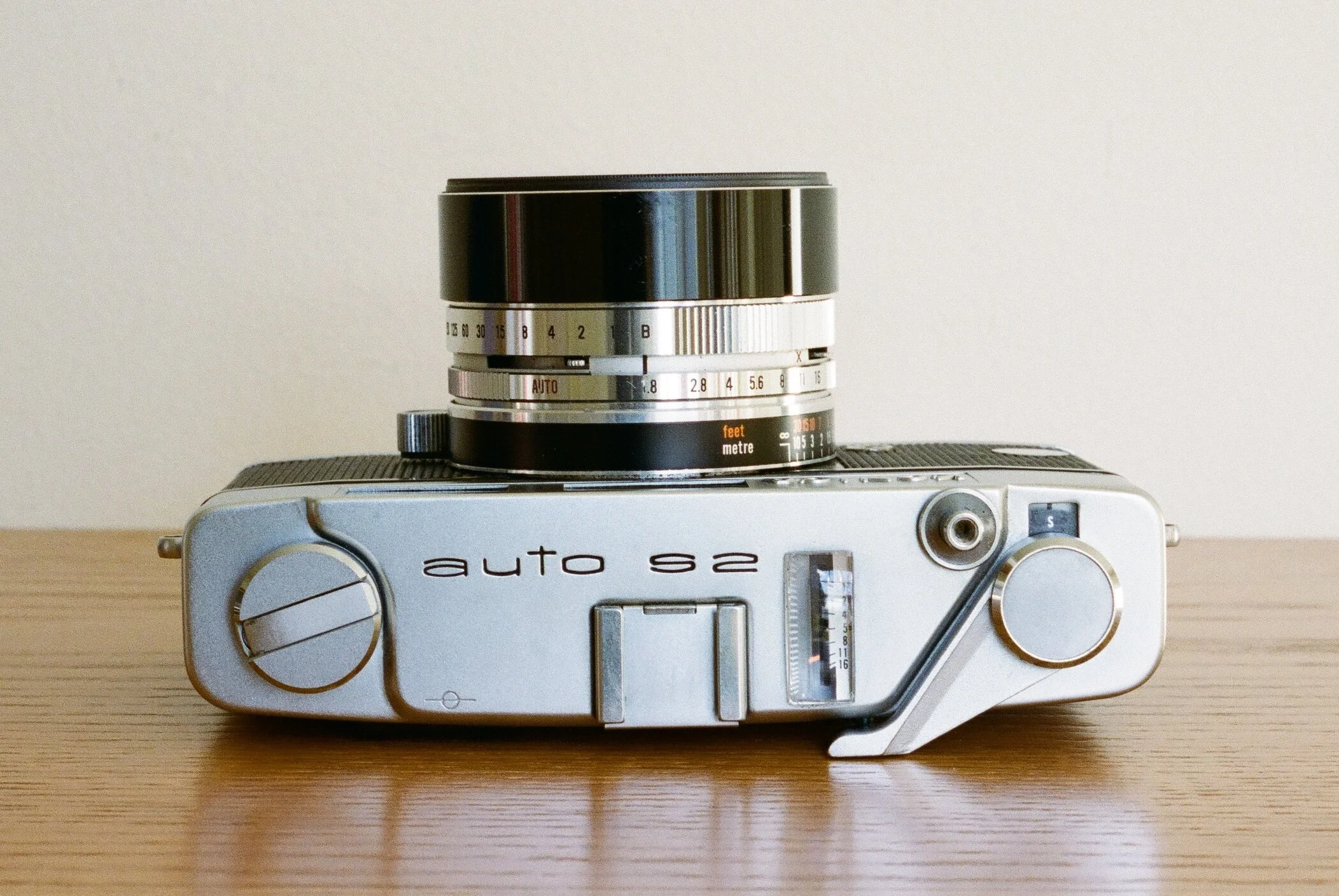
Konica Auto S2 with 45mm f/1.8 Hexanon lens. The lens hood is retracted. The ‘Auto S2’ lettering looks good! (unlike the ‘Konica’ writing on the front)
Integral lens hood
The Konica has a built-in collapsible lens hood — a useful feature. If offered a Konica Auto S2 or Minolta Hi-Matic 7 in the same condition, I’d choose the Konica for this reason.
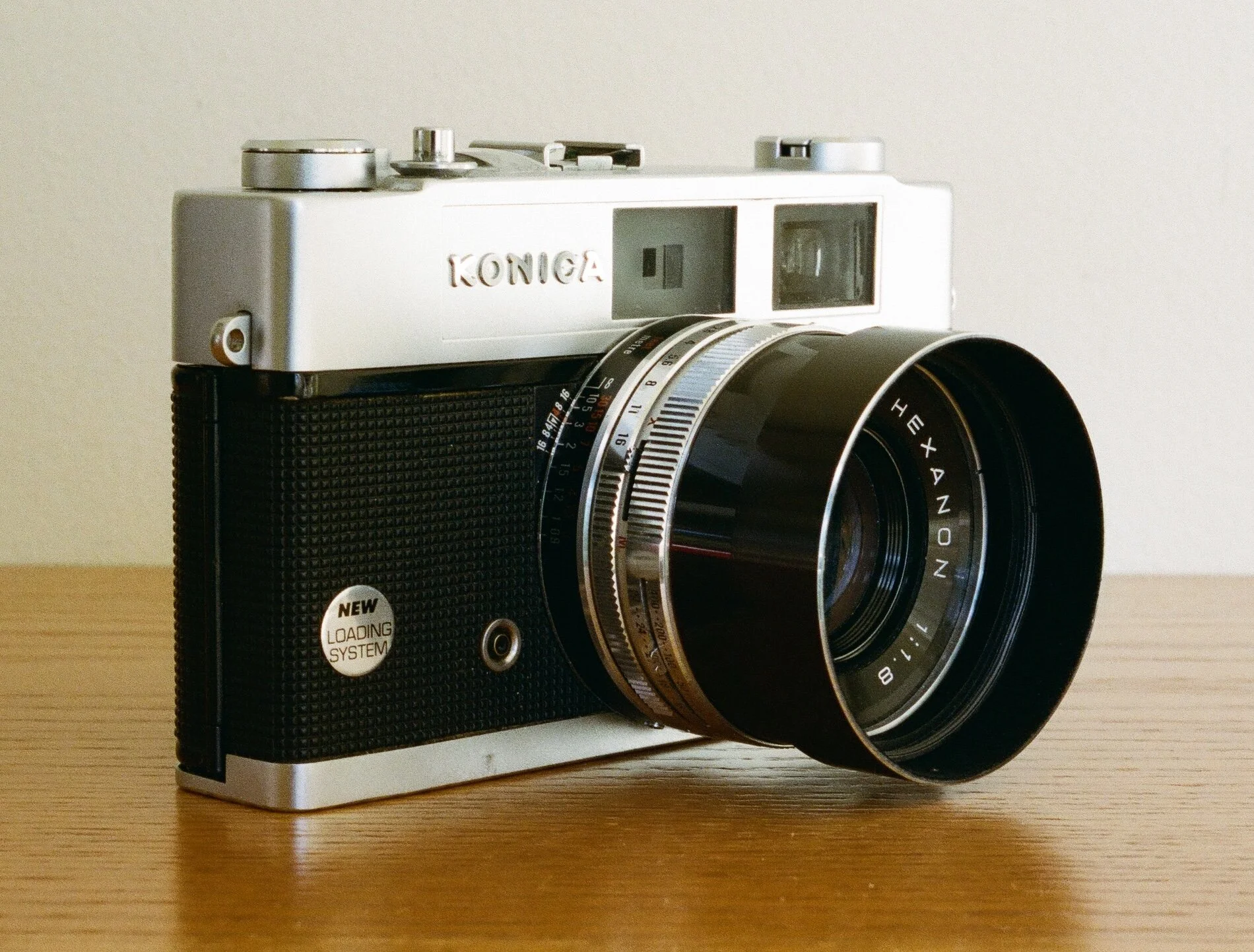
Konica Auto S2 with integral lens hood extended.
Maintenance and repair
No maintenance has been done yet on either camera. The Konica is in fine condition. The Minolta can produce equally good results because the lens and shutter are in top condition, but it is more difficult to use because the viewfinder is cloudy and the rangefinder spot is indistinct. It needs a good CLA. This is an issue specific to my camera, not to this model in general and it is a reminder that in the world of vintage film cameras, condition is all-important.
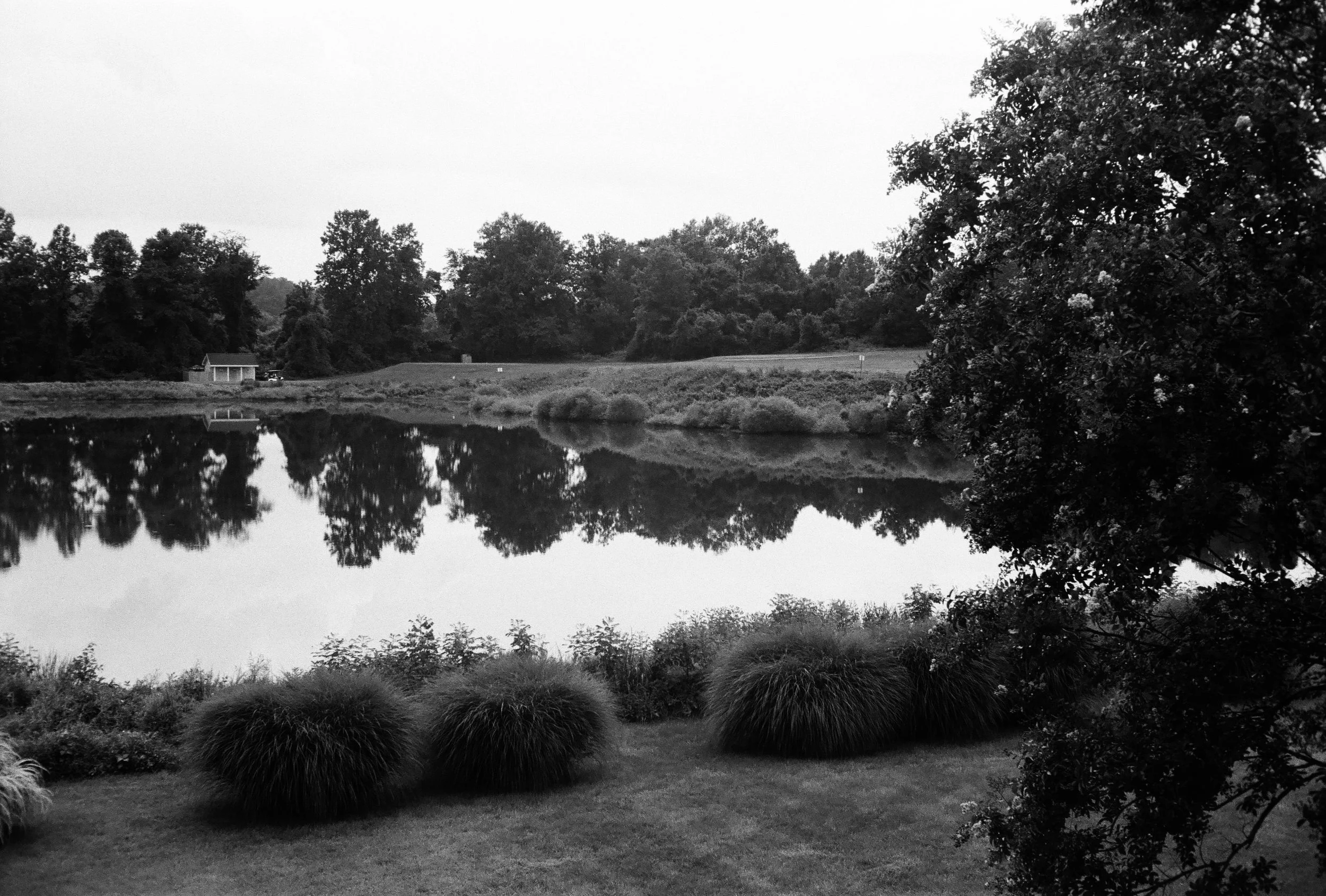
Ashton, Md. Konica Auto S2, 45mm f/1.8 Hexanon, Tri-X. 2025.
References / further reading
Camera manual: orphancameras.com
More references:
Levasseur, J. 2011 (May 27). Another Journey For John Glenn’s Ansco Camera. Washington: National Air and Space Museum, Smithsonian Institution. https://airandspace.si.edu/stories/editorial/another-journey-john-glenns-ansco-camera accessed Mar. 20, 2026
McKeown, J.M. and J.C. 1996. McKeown’s Price Guide to Antique and Classic Cameras, 1997-1998. Grantsburg, Wis.: Centennial Photo.
Neblette, C.B. 1959. Photographic Lens Manual and Directory. New York: Morgan & Morgan.